Waterfalls Mountains in Travel Thailand

Waterfalls Mountains Travel Thailand for Infomation and Guild for Vacations and Holiday

Saturday, January 27, 2007

Doi Wiang Pha National Park
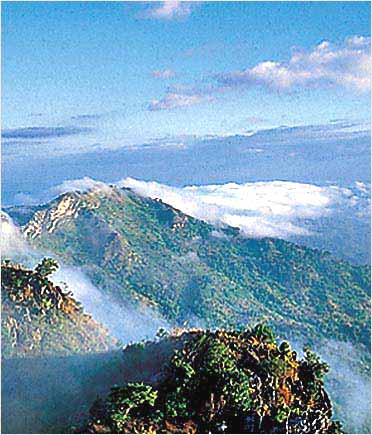


Doi Wiang Pha is to be announced as a national park covering the areas of Mae Fang National Conserved Forest in Tambol Sridongyen, Tambol Maetalob, Chaiprakarn District, Tambol Mae Kha, Tambol Mae Kha, Fang District, Chiang Mai Province, and the left side of Mae Lao National Conserved Forest in Tambol Pa Daed, Tambol Srithoi, Tambol Thakor of Chiang Rai Province within an approximate area of 583 square kilometers or 364,375 rai.
Geographical Features

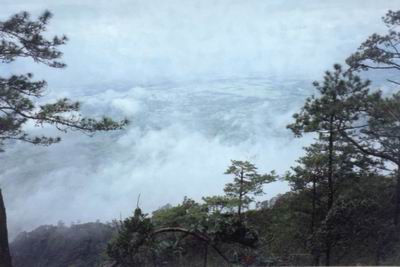
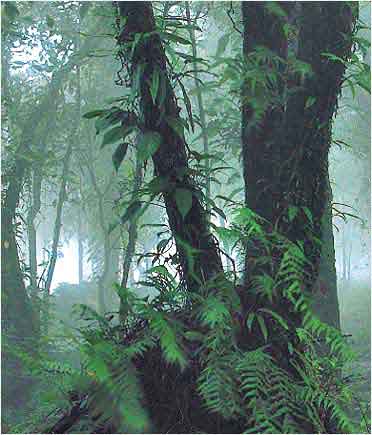
The geographical features of the National Park consist of high mountains, extending northwards, which are regarded as the boundary between Chiang Mai and Chiang Rai provinces. Doi Wiang Pha is the highest mountain of the National Park, at the altitude of 1,834 meters above the medium sea level. Most of the areas are water-source forests for major gullies, particularly Fang River and branches of Lao River such as Mae Fangluang Gully, Mae Fangnoi Gully, Yangmin River, etc.
Weather Condition
The weather at the National Park can be divided into 3 seasons including rainy season (May-October), when it rains heavily in September, winter (November-February), when the weather is cool and ideal for travelling, and summer (March-April), when the weather is rather hot.
Varieties of Plants and Wild Animals
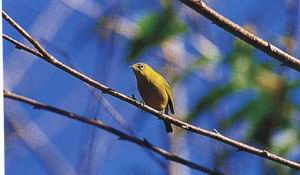

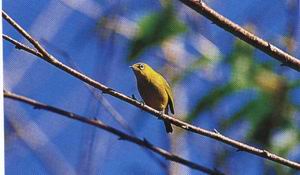
There are a variety of forests covering the whole areas of the National Park, including virgin forests, arid, evergreen forests, pinery, timber forests, and mixed forests, depending on the altitude of the areas. Major plants include teak, rubber trees, Leguminosae (Pradoo), Michelia Alba, Pinus Merkusii Jungh (two-leaf pines), different kinds of Lithocarpus Cantleyanus (Kor), moss, ferns, orchids, etc. Due to its abundance of forests, varieties of plants, and different altitudes of the areas (300-1,834 meters), the National Park has become the source of foods and dwelling places for different kinds of wild animals including Muntiacus Muntjak, wild boars, gorals, porcupines, wild rabbits, monkeys, masked palm civets, squirrels, tree shrews, and different kinds of birds such as White-rumped Shama, turtle doves, hawks, while fowls, etc
Location and Journey
Address
Doi Wiang Pha National ParkP.O. Box 14, Chaiprakarn, Chiang Mai, Thailand 50320Tel. : 0 7186 2118
By Bus
From the city of Chiang Mai, you may take Highway No. 107 to Chaiprakarn District. At Baan Mae Khi (km 125), make a right hand turn and go straight on for approximately 10 kilometers to the National Park’s office.

Labels: ,

Monday, January 15, 2007

Doi Suthep-Pui National Park


Doi Suthep-Pui used to be known as Doi Oi Chang. Its new name comes from the name of a hermit, Prarusiwasuthep who lived at Doi Suthep-Pui was a protected forest. In 1973, The Royal Forest Department decided that Doi Suthep and 13 other forest areas in the country should eventually be national parks. The Royal Forest Department sent Mr.Panya Boonsomboon to survey the area. After that, the national park committed decided that only forest in good condition should be included in Doi Suthep-Pui National park and areas occupied by villagers should be excluded. In 1981, as the 24th national park of Thailand which encompasses 161.06 square kilometers. The following year, an additional 100 square kilometers were annexed to the park, bringing the total to 261.06 square kilometers.

Geographical Features

Doi Suthep, Doi Buakha and Doi Pui are the three main peaks in the park. The highest peak, Doi Pui, rises to 1,685 meters above mean sea levels.


Weather Condition

Because of the high altitude, the weather on the upper slopes of the mountains is cool and pleasant all year even in hot season, average temperature is about 20 - 23 degree celsuis. In the cool season, the air is cold and clear. Temperature can drop as low as 6 degree celsuis in February, August and September are the wettest months with rain falling daily.
Varieties of Plants and Wild Animals
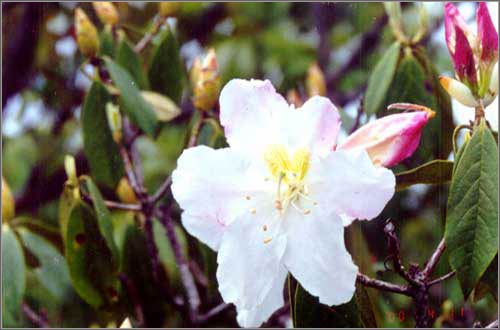
There are two basic types of forest on the mountain: Deciduous forest below about 1,000 m elevation and evergreen forest above. The deciduous is further divided into two kinds, deciduous dipterocarp-oak Forest in the driest areas and mixed evergreen deciduous forest along streams and gullies. Common species are trees of the families Dipterocarpaceae, Fagaceae and Magnoliaceae. Wildlife in the park includes common muntjac, wild boar, macaque and other small mammals. More than 300 species of birds can be seen here, including red junglefowl, pheasants, eagles, parrots, bulbuls and minivets. Rare species of amphibian, the crocodile salamander that can be found in only four localities in Thailand, one in Doi Suthep.
Location and Journey
Address
Doi Suthep-Pui National ParkHuai Kaew road, Suthep Sub-district, Muang Chiang Mai, Chiang Mai, Thailand 50200Tel. : 0 5321 0244 Fax : 0 5321 2065
By Car
From Bangkok use highway no.1 and turn to highway no.32 (Asia) you will pass Ayuthaya, Angthong and Nakornsawan. Then use highway no.1 pass Lampang and turn left to Chiang Mai. It takes you about 696 kilometers from Bangkok.
By Airplane
2 Airlines are operate daily flights to Chiang Mai from Bangkok.

Labels: ,

Saturday, January 13, 2007

Doi Phahompok National Park (Mae Fang)

Mae Fang National Park, located in Amphur Mae Eye, Amphur Fang, Amphur Chai Prakarn of Chiang Mai Province, consists of complicated geography which is a part of a watershed called Dan Lao Mountain Range. It is the productive forest which not only has a great number of plants and animals but also beautiful natures, for examples, Huai Bond Cave, Hot-mineral Water Pond, Hot Spring and Mae Jai Stream. It is an importantly traveling place of Chiangmai Province. Traveler can take convenient ways to get there. It is 524 square kilometers, and has been declared a national park since September 4, 2000.


Weather Condition


The temperature in this area is approximately 25 degrees Celsius all the year round; it is about 14 - 19 degrees Celsius on November to February, the highest temperature is 39 degree Celsius on April and heavy rain on May to September approximately 1,184 mm. of rain all the year round.

Varieties of Plants and Wild Animals


The forest is productive and consists of semi-evergreen forest, montane forest, pine forest (coniferous forest), mixed forest and deciduous forest which have many kinds of economically valuable plants such as Malabar ironwood, wild Euphorbiaceae, Yang, Burmese ebony, Lagerstroemia, Teak wood, wild champak and emblic myrabolan etc. And more importantly, there are rare floras such as Impatiens jurpioides T. Shimizu and Rhododendronwhich which can be normally found in Doi Pha Hhom Bhog.

The forest of Mae Fang National Park is on complicated mountain and in contact with the forest of Myanmar so that makes many kinds of wild animal migrating into this area regularly. And because it is the productive forest so that makes it have a number of animals, for examples, mammals such as barking deer, deer, bear, wild bore, loris and mountain goat—a reserve animal of Thailand, birds such as turtledove and purple cochoa--found only in Northern Thailand, and nearly extinct butterfly such as Imperial Butterfly, Kaiser Butterfly and Phutan Butterfly.

Location and Journey
Address
Doi Phahompok National Park (Mae Fang)
P.O. Box. 39, Pong Nam Ron Sub-district,, Fang, Chiang Mai, Thailand 50110
Tel. : 0 5345 3517-8 Fax : 0 5345 3517-8 ext 104

By Car
From Chiang Mai province along the highway 107 (Chiang Mai-Fang) to Amphur Fang. Then along to Fang-Mon Bhin road about 3 km, take a right at Route 4055 to Pong Nam Ron village. It is 8 kilometers to the Park Headquarter

Labels: ,

Sunday, November 26, 2006

Huai Nam Dang National Park, Chiang Mai


It was formerly know as an area of Doi Sam Muen highland development project which was initited by His Majesty the King to solve the problem of forest encroachment and poaching, as well as to enhance the lives of the local hilltribe people. As this area is filled with attractive natural condition and virginal forests provided vital watersheds, Huai Nam Dang was declared the 81st national park of Thailand by the Royal Forest Department on 14 August 1995.

Huai Nam Dang National Park covers four districts : Mae Taeng, Chiang Dao, and Wiang Haeng in Chiang Mai province including Pai district in Mae Hong Son province, covering an area of approximately 1,247 square kilometres. Later on it was designated as the National Park for commemorating 100th year establishment of the Royal Forest Department and also for the celebration of His Majesty the King’s 50th year on the throne.

Geographical Features

Huai Nam Dang National Park is situated on top of the ridge of hills and the same range as Chiang Dao mountain range. The highest peak-Doi Chang peak (at 1,962 metres above sea level) is the vital source of important streams which flow into the Pai river, Ping river, and Taeng river.


Weather Condition

The climate is comfortably pleasant. The average year-round temperature is 20๐c, dropping to 10๐c in October to February and soaring to 25๐c on March to April. The wettest months being May to September.


Varieties of Plants and Wild Animals

The healthy natural condition of Huai Nam Dang National Park is a matrix of highly diverse habitat types. Main plants found in this park are Hopea sp., Dipterocarpus spp., Tectona grandis (Teak), Pterocarpus macrocarpus, Michelia floribunda, Pinus kesiya, Pinus merkusii, and orchids especially, Dendrobium infundibulum which charmingly blooms during January to March. Many wild animals dwelling in this richest forest are elephants and some rare animals such as Salamanders.

Location and Journey
Address
Huai Nam Dang National Park
Mu 5, Kit Chang Sub-district,, Mae Taeng, Chiang Mai, Thailand 50150
Tel. : 0 5324 8491, 0 5326 3910 Fax : 0 5324 8491

By Car
Start at Chiang Mai province. Huai Nam Dang National Park is situated on the road number 1095 at Km. 65-66. It located about 109 kilometers northwest of Chiang Mai on the way to Mae Hong Son province. Several buses leave Chiang Mai’s buses station each day and cover the journey in about three hours.

For private car, take road number 107 north about 37 kilometers to Mae Malai Market, from where the road number 1095 turns left and head for the hills for about 65 kilometers. Then a right turn leads just 6 kilometers from the park checkpoint to the Headquarter


Labels: ,

Monday, November 20, 2006

Doi Inthanon National Park


Doi Inthanon National Park covers the areas of Sanpatong District, Chomthong District, Mae Chaem District, Mae Wang District, and Toi Lor Sub-district of Chiang Mai Province within an approximate area of 482 square kilometers. The National Park consists of high mountains, including Doi Inthanon, which is the highest mountaintop in Thailand and the source of many rivers such as Ping River, where the Bhumipol Dam is situated and generating the electrical power. The National Park has beautiful natural scenery such as waterfalls, particularly Mae Ya Waterfall, which is one of the most beautiful waterfalls in Thailand.Historically, the mountain of Doi Inthanon was refered to as Doi Ang Ka. Prince Intharawichayanon, the last ruler of Chiang Mai, realized the importance of the country’s forests, especially in the north, where the forest serve as the watershed for the country. He was interested in helping and supporting people who were investigating the history in his area. So he requested that his body must be placed on the summit of Doi Ang Ka. After his death, the mountain was renamed Inthanon, a short version of his name. Today, visitors can see the Inthanon Wichayanon stupa on the summit of Doi Ang Ka.
Geographical Features
The geographical features of the National Park consists of high mountains, including Doi Inthanon, which is the highest mountaintop in Thailand (2,565 meters above the sea level), followed by Doi Huamodluang (2,330 meters above the sea level). Doi Inthanon is the source of many rivers including Mae Klang, Mae Pakong, Mae Pon, Mae Hoi, Mae Ya, Mae Chaem, Mae Khan, and being part of Ping River, where the Bhumipol Dam is situated and generating the electrical power.
Weather Condition

Since the National Park is located at 2,565 meters above the sea level, it has cold weather and high humidity throughout the year, particularly on the top of the National Park. In winter, the temperature at the National Park is below 0„ac. And in summer, despite hot weather in central Chiang Mai and nearby districts, it is still freezing on the top of Doi Inthanon and tourists should be prepared with thick clothes.


Varieties of Plants and Wild Animals

The forest in the park is one of the country’s very significance and valuable heritage. Forests include Moist Evergreen Forest, Pine forest and Mixed Deciduous Forest, worth in economic like teak and mountain pine. Dipterocarp spp. Xylia xylocarpa, Pterocarpus, macrocapus Terminalia sp. and Lagerstroemia sp. to name a few. In addition to these, there are many beautiful flowers including vanda orchid, phycastylis and rhododendron. Sphagnum Moss and osmanda fern are found at higher levels in the park. fifty years ago, the mountain peaks were home of hill tribe people. The biggest village was Ban Khun Klang, whose agriculture method was often destructive to the forest ecosystem. Currently the several Royal Projects, assists the villagers in growing cold-climate fruit such as strawberries, grapes and apples as well as flowers. The number of wild animals in the park is decreasing the encroachment. The animals are hunted and their habitats are destroyed for agriculture. The remaining animals include serpent, gibbons, tigers, deer, wild boars, Siamese hares and Red Jungle fowls. Because of its broad altitudinal range and the cool climate of its upper reaches, the park supports the largest number of bird species of any site in Thailand. The Center for Wildlife Research at Mahidol University records a present total of 362 species and expects addition many at the summit are migrants from northern Asia. Species restricted to Doi Inthanon are Ashy-throated Warbler and an endemic race of the Green-tailed Sunbird; the park is the only site where the Chestnut-bellied Rock-Thrush and the Yellow-bellied Flower pecker are known to over summer and probably breed.
Location and Journey
From Chiang Mai, take route 108 towards Chomthong. At km.57 (1 kilometer before arrive to Amphur Chomthong) take a right on route 1009 (Chomthong-Doi Inthanon Road). At km.31 of this road is the Park Headquater.
Address
Doi Inthanon National Park, Chom Thong, Chiang Mai, Thailand 50160Tel. : 0 5326 8550 Fax : 0 5326 8577


Labels: ,

Saturday, November 18, 2006

Royal Flora Ratchaphruek 2006


International Horticultural Exposition for His Majesty The King1 Nov. 2006- 31 Jan 2007, Chiang Mai, Thailand


Royal Flora Highlights


GARDENS FOR THE KING
Path of Wisdom
His Majesty the King’s care and concern for the lives of the people, combined with His intimate knowledge and expertise in agriculture have resulted in the introduction and successful implementation of thousands of Royal Projects which have improved the quality of life for millions.

“Gardens for the King” which comprises “International Gardens” and “Corporate Gardens” will not only nourish the visitors’ eyes with cultural and horticultural beauty but will also enrich their minds with exotic cultures and knowledge of agricultural Royal Projects.


INTERNATIONAL GARDEN


This area is allocated for exhibitions of national blossoms, blooms, and horticulture as well as the cultural arts and architecture of 30 countries from around the world.

Each garden will reflect a historic diplomatic, cultural and trade ties between nations, people or, where possible, royal families of the two countries.

Participating Countries
Japan, South Korea, Vietnam, Malaysia, Cambodia, Lao PDR, Indonesia, India, Nepal, Bhutan, Pakistan, China, Brunei, Turkey, Spain, Belgium, Netherlands, Bulgaria, Mauritania, Kenya, Nigeria, Gabon, Sudan, Morocco, Tunisia, South Africa, Burundi, Qatar, Iran, Yemen, Trinidad & Tobago, Canada


CORPORATE GARDEN

Each of the 80 gardens from state enterprises and domestic and international major corporations will utilize creative garden design to visually illustrate and commend a range of concepts, theories and ‘best practices’ behind Royal Projects initiated by His Majesty the King and which reflect His Majesty’s tremendous insight and ingenuity.


THAI TROPICAL GARDEN

The Way of Life
Encompassing an area of over a hundred thousands square meters, the “Thai Tropical Garden” is a colossal classroom that showcases the vast diversity in the way of life of tropical lands. Visitors will be able to witness first-hand an extensive variety of tropical horticulture encompassing fruits, plants, flowers and herbs.

As visitors stroll down the path away from the leisurely ambience of the Expo Plaza, the center point of the exposition activities, amenities and services, they find themselves being drawn towards the Royal Pavilion.


THE ROYAL PAVILION

The Way of Light
The majestic Royal Pavilion, constructed in the exquisite Lanna architectural style, is located right in the heart of the event site. Inside, visitors will be held in awe by the countless ways in which the lives of the people have been positively affected by His Majesty the King’s works and dedication.


ORCHID PAVILION

Orchids of The World
A magnificent showcase of 50,000 orchid plants representing nearly 10,000 orchid species


This will be also be the largest and, at 92 days, the longest-running orchid exhibition and competition ever held in Thailand.

The Orchids of the World expo at the Royal Flora Ratchaphruek 2006 International Horticultural Exposition is designed to demonstrate Thailand’s potential for being the orchid capital of the world, to promote the growth and development of the orchid industry; promote greater awareness of technological advances in orchid cultivation and production; and highlight Thailand’s success in Research and Development initiatives related to orchid cultivation and production.

The Orchid Pavilion is being built on an area of 6,400 square metres to house a special exhibition of orchids, presented under the ‘Orchids of the World’ theme.

The Orchid Pavilion at the International Horticultural Exposition sets out to be a comprehensive world-class knowledge center for Orchid Cultivation.

Orchid Park
The Orchid Park is the largest of its kind ever created in Thailand. It has been specially designed to showcase a wide variety of exquisite orchids in surroundings that emulate closely their natural habitats.

The exhibition is being jointly organized by the Ministry of Agriculture and Cooperatives, Department of Agriculture and Horticultural Science Society of Thailand, along with the Ornamental Plants Association of Thailand, numerous orchid clubs and associations, educational institutions and other related government organizations. It is supported by the International Society for Horticultural Science and the World Flower Council.

Competitions
With the orchid exhibition lasting a full 92 days, the organizers have planned weekly orchid competitions. These include natural orchid gardens; landscaped orchid gardens featuring the innovative or imaginative use of orchids; potted orchids; and cut flowers. Beyond the aesthetic appeal, entries will be judged in accordance with internationally-recognized standards. This is the first time that international standards will be applied to judging orchids in Thailand.

One of the competitions will be live orchid arrangement in which entrants must use their creativity to design an arrangement of living orchid plants, either incorporated into a small natural garden setting or combined with other decorative objects in a free style arrangement. In other competitions, prizes will be awarded for the best potted orchids and the best cut flower arrangement using orchids.


Map for Travelling
Please Click to Expand


For Details
Please Click to View
Program and Activity
1 – 12 November 2006
Royal Flora Ratchaphreuk 2006 Opening Ceremony
International Flower Expo
5 November 2006
‘Loi Krathong – Festival of Light’
10 – 16 November 2006
Flower Universe
17 – 27 November 2006
Aquatic Plants and Lotus
1 – 11 December 2006
Rare Species and Novelties
4 - 10 December 2006
King Bhumibol Adulyadej’s Birthday
16 - 24 December 2006
Royal Flora Book Expo
29 December 2006 – 7 January 2007
Fruits and Vegetables
11– 14 January 2007
AgriTech 2007
20 – 31 January 2007
International Green Pot Plants
31 January 2007
Closing Ceremony

Labels: